Aluminum Honeycomb Panel Specifications Explained: Thickness, Core and Finishes
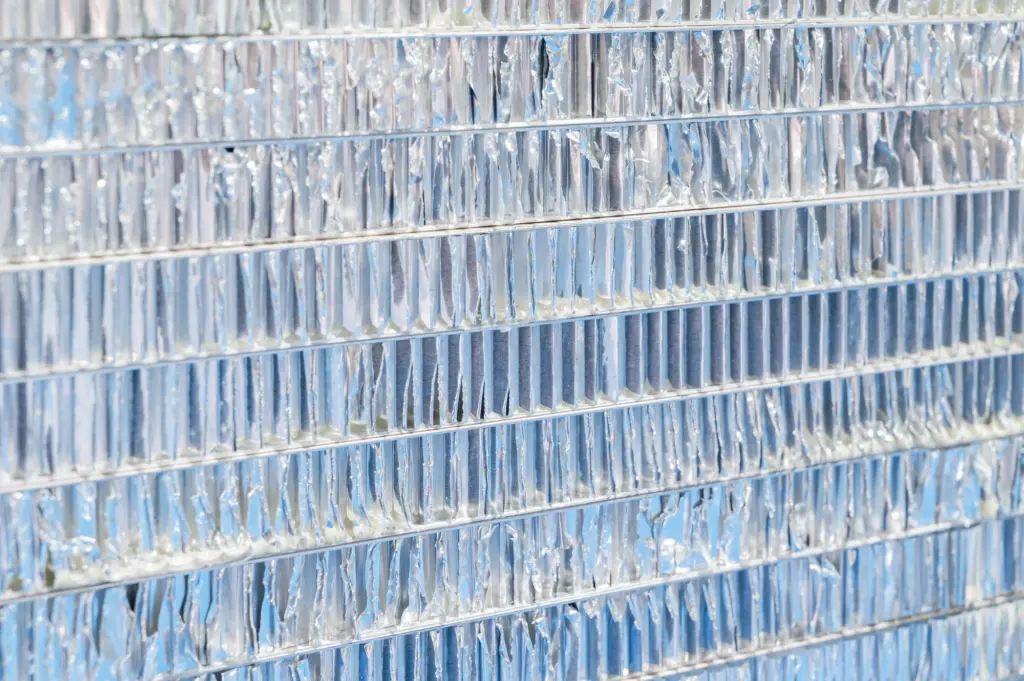
Aluminum honeycomb panels are one of the two core panel families we produce at our Foshan factory, alongside welded aluminum panels, wall panels and ceiling panels. Our panel capacity runs at around 100,000 sheets per month, so we spend every day answering the same specification questions from importers and project buyers. This article explains what each line on a honeycomb panel spec sheet actually means.
How the Panel Is Structured
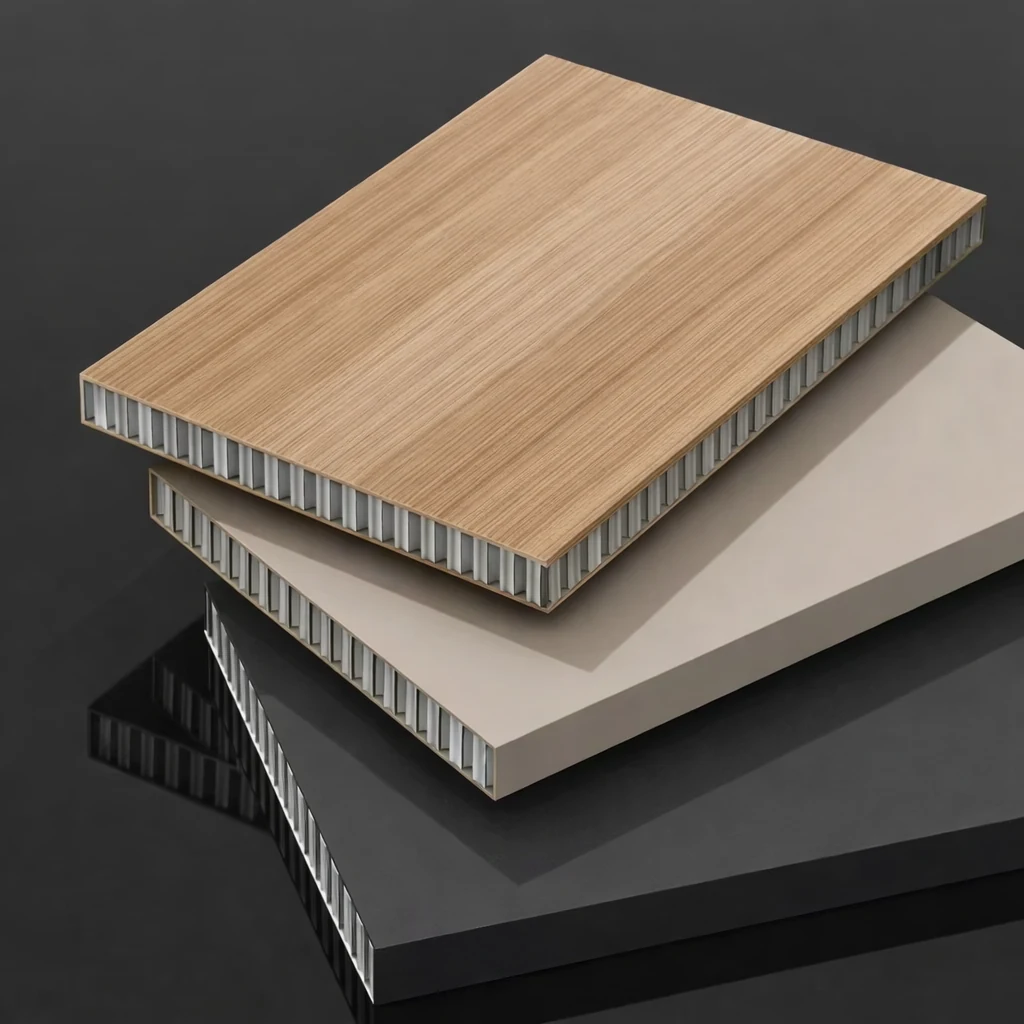
A honeycomb panel is a sandwich: two aluminum skin sheets bonded to a core of aluminum honeycomb cells. The structure copies the principle of an I-beam — the two skins carry bending loads, spaced apart by the lightweight core that keeps them from buckling inward. The result is a panel that is stiff and flat at a fraction of the weight of solid aluminum plate.
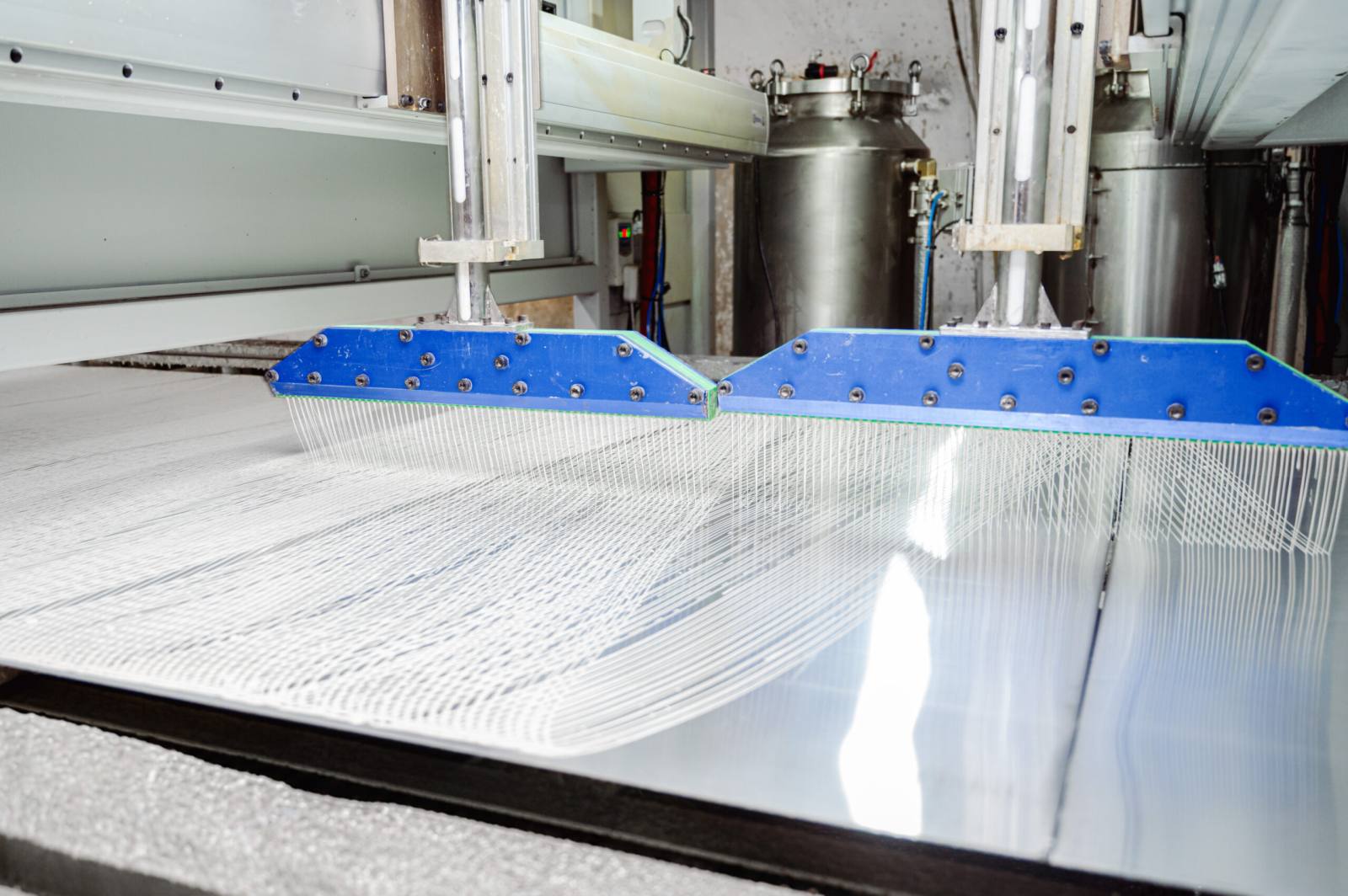
In our factory the skins and core are bonded on a dedicated lamination line. Bond quality is the single most important invisible property of the panel: a weak bond means the skins can separate under load or temperature cycling.
Typical Thickness and Core Cell Ranges
The numbers below are typical industry ranges so you can read any supplier’s quotation critically. Exact values depend on application, so confirm them line by line before ordering — that is exactly what our pre-order checklist at the bottom of this article is for.
| Parameter | Typical range | What it controls |
|---|---|---|
| Total panel thickness | 6–25 mm (furniture boards cluster toward the thicker end) | Stiffness and edge-fixing options |
| Skin thickness | 0.3–1.0 mm per side | Surface durability, screw-holding at edges, price |
| Honeycomb cell size | 3–10 mm | Smaller cells = higher strength and flatness, higher cost |
| Core density | Set by cell size + foil gauge | Load capacity and panel weight |
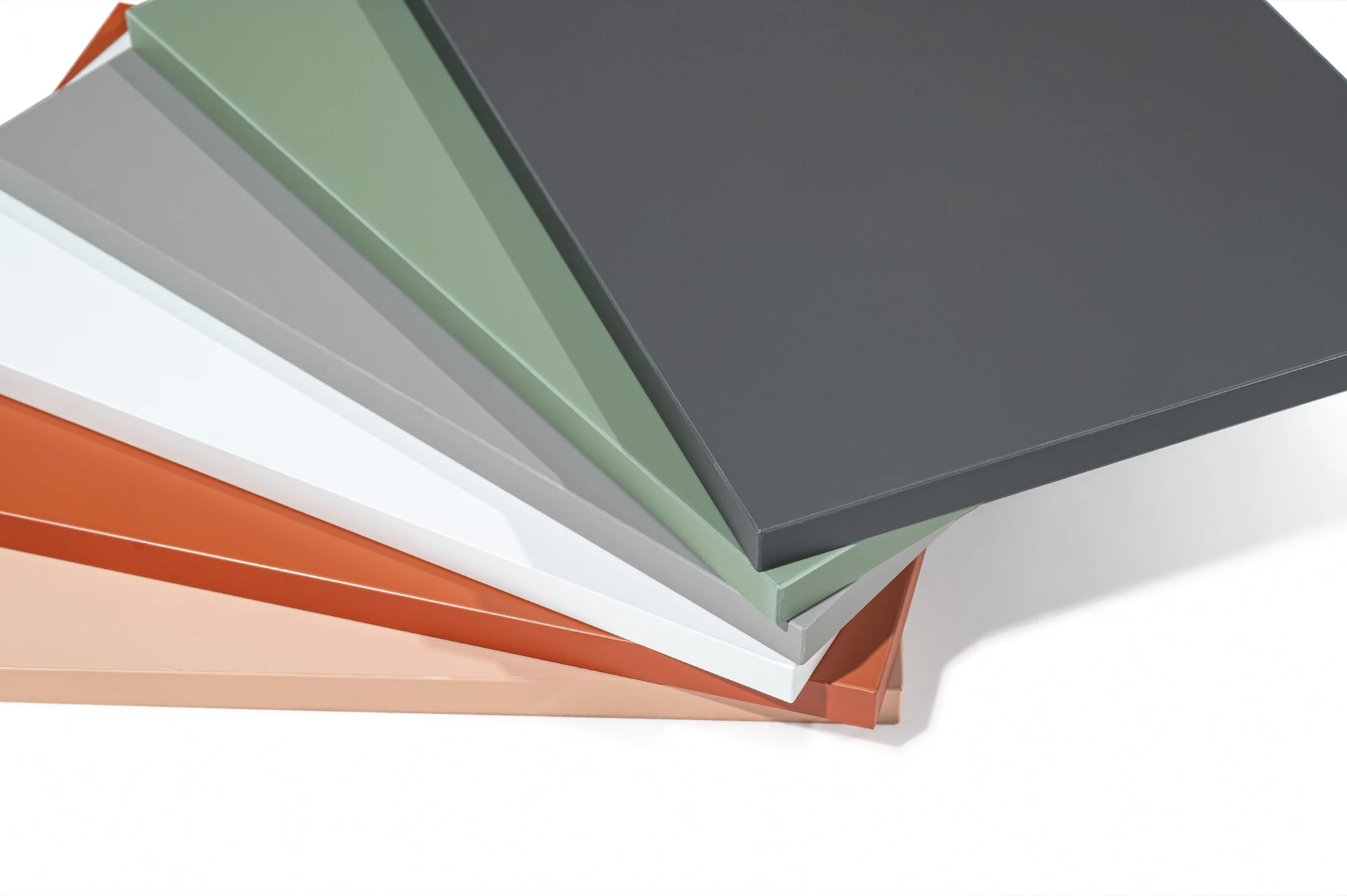
A common buyer mistake is comparing quotations by total thickness alone. A 15 mm panel with thin skins and large cells performs very differently from a 15 mm panel with thicker skins and a dense core — and costs differently too. Always compare skin gauge and cell size, not just the headline number.
Surface Finishes
The raw aluminum skin takes almost any finish, which is why honeycomb panels serve both furniture and decoration markets:
- PET film lamination — matte or gloss solid colors, fingerprint-resistant, popular for cabinet fronts.
- PVC film lamination — cost-effective colors and patterns.
- Wood grain transfer — realistic timber looks without any wood, so no formaldehyde and no termite risk.
- Powder coating — durable solid colors, well suited to wall panels and ceiling panels.
- Texture films — leather, stone and fabric effects for feature walls and premium joinery.
Where Honeycomb Panels Are Used
- Furniture boards — cabinet bodies, wardrobe doors, tabletops, where light weight with high flatness matters.
- Wall cladding — lobbies, elevators, feature walls; large panels stay flat without heavy sub-frames.
- Ceiling panels — lightweight, easy to suspend, clean lines.
- Doors and partitions — rigid panels that do not warp over time.
Weight matters beyond the building too. Lighter panels mean lower freight cost per square meter and easier on-site handling, which shortens installation time on large projects.
Your Pre-Order Specification Checklist
Before you send an RFQ — or before you accept one — confirm these items in writing:
- Total thickness and tolerance
- Skin thickness per side
- Core cell size and foil gauge
- Finish type and sample approval
- Panel sizes and cutting tolerance
- Edge treatment (sealed, trimmed, or banded)
- Packing method and sheets per pallet
- Sample lead time and bulk lead time
At Ruixiang, standard panels ship within 7 days and custom panels within 15 days; samples take one week, and honeycomb panel orders start from 80 sheets per pallet. We accept EXW, FOB or CIF terms and can share container space with other products if your volume is mixed. Send us your checklist above and we will return a line-by-line quotation within 24 ساعات.
Discuss your aluminum furniture project
Share your product list, drawings or target finishes. Our Foshan factory team replies with factory-direct pricing, MOQ and lead times within 12 ساعات.


